
Key Takeaways
- Mass Save heat pump offers depend on your sponsoring utility; towns like Braintree and Middleborough have their own municipal utility programs.
- Ask every contractor for a Manual J load calculation, which Mass Save says Massachusetts code requires for proper sizing.
- Rebates require a Mass Save Heat Pump Installer Network contractor and equipment on the qualified products list; check current amounts at masssave.com.
- Get outdoor unit placement, line set, controls, electrical work, and removal of old equipment in writing.
- Compare several quotes on the same points, not just price.
Heat pumps have moved from a curiosity to a common upgrade on the South Shore, in Cape houses heated by oil, in Quincy two-families on electric baseboard, and in newer colonials replacing aging central air. The equipment has improved a lot. The weak point is usually the design and installation, which is why the questions you ask before signing matter more than the brand on the box.
This guide covers the questions that separate a careful proposal from a rushed one. It also explains the basics of Mass Save eligibility, because a small detail missed before the contract is signed can affect whether a rebate applies at all.
First, Find Out Whether Mass Save Applies To You
Mass Save is a joint program of Berkshire Gas, Cape Light Compact, Eversource, Liberty Utilities, National Grid, and Unitil, and its heat pump offers depend on which of them is your sponsoring utility. For 2026, Mass Save's air source heat pump rules limit its offers to residential customers replacing oil, propane, or electric resistance heat where Cape Light Compact, Eversource, National Grid, or Unitil is the electric sponsor, or customers replacing natural gas heat where Berkshire Gas, Eversource, Liberty, National Grid, or Unitil is the gas sponsor.
Towns with municipal light plants work differently. Braintree's municipal utility, BELD, runs its own rebates and energy assessments for oil- or electric-heated homes and refers gas-heat customers to Mass Save. Middleborough Gas and Electric runs its own residential rebate program, including rebates for qualifying ductless heat pumps. If you live in one of those towns, check with your local utility before you assume a Mass Save rebate.
Mass Save has posted changes to its air source heat pump rebates for projects installed on or after January 1, 2027. We don't quote rebate figures here. Check the current rebates at masssave.com, and ask your contractor to confirm in writing which rebate type your project is expected to qualify for.
Rebate Basics Worth Knowing
- Mass Save offers whole-home, partial-home, and basic heat pump rebates. Which one applies depends on whether the heat pump becomes your only heating and cooling source, supplements a system you keep, or doesn't displace fossil fuel or electric resistance heat at all.
- Equipment must meet ENERGY STAR Cold Climate requirements and appear on the Mass Save Heat Pump Qualified Products List.
- The system must be installed by a contractor in the Mass Save Heat Pump Installer Network.
- Whole-home rebates require the home to be sufficiently weatherized, documented on a signed verification form.
- Partial-home rebates require an integrated control from Mass Save's qualified list for zones where oil, propane, or gas stays in use.
Before you commit, you can also book a no-cost virtual Decarbonization Consultation through Mass Save. Its specialists answer technical questions about heating systems and can help you review and compare quotes.
Questions About Sizing And Design
Sizing is the single biggest technical question in a heat pump job. An oversized system can cycle on and off and struggle with comfort and humidity; an undersized one can leave cold rooms on the coldest nights. Mass Save's 2026 guide to choosing an installer tells homeowners to ask whether the contractor will perform a Manual J heat load calculation, which it describes as required by Massachusetts code to size the system properly.
Homeowners should ask whether the contractor will perform a Manual J heat load calculation, which Mass Save describes as required by Massachusetts code to properly size the system for the home.
Source: Mass Save, Before you hire: A guide to choosing the right heat pump installer
- Will you do a room-by-room Manual J load calculation, and will I get a copy?
- What design outdoor temperature did you use, and how does the system perform at that temperature?
- Is this system sized to heat the whole house, or to share the load with my existing boiler or furnace?
- If my house needs air sealing or insulation first, how would that change the size you recommend?
- Why this number of indoor units, and why these rooms?
Ask the same questions of every contractor. If one proposal is much larger or smaller than the others, the load calculation is where you'll find out why.
Questions About The Installation Itself
Mass Save publishes a list of questions to ask an installer. Several of them deal with details that are hard to fix after the fact:
- Will you install the system following the Mass Save Residential Air Source Heat Pump Quality Installation Checklist?
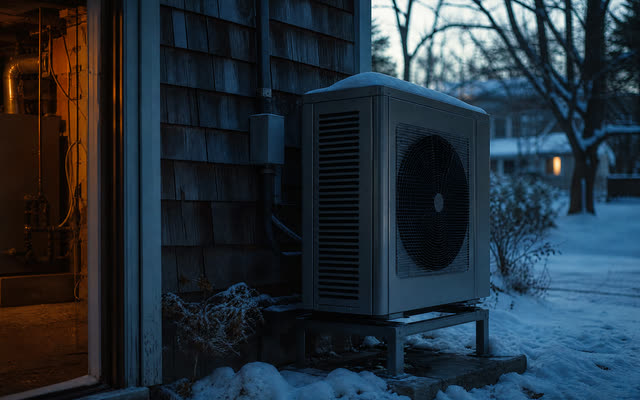
- Where will the outdoor units go, and why there? Ask how they'll be kept clear of snow and roof runoff.
- Will the refrigerant lines, often called the line set, be visible outside, and will they be insulated and covered?
- Why this type of indoor unit, such as wall-mounted, ceiling cassette, or ducted, and where exactly will each go?
- Will you do a triple evacuation before charging the refrigerant lines?
- Will you use subcontractors, and for which parts of the job?
- Will you walk me through how to run and maintain the system when you finish?
Coastal homes add a few concerns of their own. If you live near the water in Quincy, Weymouth, or Plymouth, ask how the contractor plans to mount and protect outdoor equipment against wind, drifting snow, and salt air, and what the manufacturer's warranty says about coastal installations.
Questions About Controls And Your Existing System
Many South Shore homeowners keep an existing boiler or furnace as backup at first. That can work well, but only if the two systems are set up to cooperate. Ask:
- Will a wall-mounted thermostat or a handheld controller run the system, and why?
- If I keep my boiler or furnace, what integrated control will you install, and at what outdoor temperature will it switch over?
- How will the two systems avoid fighting each other on mild days?
- Should my old system be removed now or later, and what permits cover removal of an oil tank?
Mass Save's partial-home rebate requires an integrated control from its qualified product list for zones where fossil fuel heat remains. It also offers a switchover temperature calculator so you can see how that setting interacts with current fuel prices.
Questions About Electrical Work And Permits
- Does my electrical panel have room for the new circuits, or will it need an upgrade?
- Who does the wiring, and do they hold a Massachusetts electrician license?
- Which permits will be pulled, such as electrical, building, or sheet metal for ducted systems?
- When will inspections be scheduled, and do I need to be home?
Massachusetts requires a master or journeyman electrician for electrical work in your home. Ductwork falls under the sheet metal license. Our guide to choosing an HVAC contractor on the South Shore explains which license covers which part of the job.
Questions About Price, Financing, And Paperwork
We don't publish prices, and heat pump quotes vary widely with house size, the number of zones, and electrical work. Instead of chasing a small number, ask what each proposal includes:
Before You Sign A Heat Pump Contract
- Every outdoor and indoor unit is listed by model number, and each appears on the Mass Save qualified list.
- The proposal says which rebate type the contractor expects and who submits the paperwork.
- Line set covers, condensate lines, wall patching, and pads or stands for the outdoor unit are included or clearly excluded.
- Electrical work, permits, and removal of old equipment are spelled out.
- Equipment warranty and labor warranty are written down, including any registration the manufacturer requires.
- Payment milestones match progress, with a final payment after the system is running and inspected.
Ask about financing too. National Grid's guide to heat pump rebates describes the Mass Save HEAT Loan as a seven-year, zero-interest loan for qualifying installation and equipment costs. Mass Save also offers enhanced incentives for income-qualified households, so check those before comparing quotes.
One paperwork detail is easy to miss. Since October 1, 2026, Mass Save heat pump rebate applications have required the serial number and a clear photo of each outdoor unit's nameplate. Ask the installer to photograph the nameplate before the unit is mounted somewhere hard to reach.
How To Compare Two Or Three Quotes
Mass Save suggests collecting several proposals; its 2026 installer guide recommends three to five. Line them up on the same points: load calculation, equipment size, number of indoor units, controls, electrical work, exclusions, warranty, and rebate handling. The contractor who answers your questions clearly is usually the one who will answer the phone when something needs adjusting next winter.
When you're ready to talk to someone, our heat pump installation page and the ductless mini-split page cover the options, and the Quincy heating and cooling page has local notes. South Shore HVAC Finder connects you with an independent local HVAC contractor who serves your town; the questions above are yours to ask.
Sources
- masssave.com/residential/rebates-offers-services/heating-and-cooling/heat-pumps/
- masssave.com/blog/residential/before-you-hire-a-guide-to-choosing-the-right-heat
- masssave.com/-/media/Files/PDFs/Save/Residential/HeatPump/Heat-Pump-Installer-Re
- masssave.com/en/residential/find-a-contractor/find-a-heat-pump-installer
- masssave.com/en/residential/rebates-offers-services/decarbonization-consultation
- nationalgridus.com/media/pdfs/resi-ways-to-save/cm9784_how_to_participate.pdf
- beld.com/energysavings/
- mged.com/256/Residential-Energy-Savings
- mass.gov/info-details/electricians-consumer-fact-sheet
- mass.gov/info-details/sheet-metal-worker-consumer-fact-sheet
Written by the South Shore HVAC Finder editorial team for homeowners on the Massachusetts South Shore. This guide is general information, not legal advice. See our Editorial Standards.